Arduino Prototyping: Bridging Digital and Physical Worlds
Software lives in an abstract digital realm—ones and zeros, APIs and databases. But the real world is physical: motors turning, sensors detecting, lights illuminating, sounds playing. Arduino microcontrollers bridge these worlds, letting software interact with physical reality in ways that pure web or mobile apps never can.
This intersection of software and hardware opens up possibilities that many businesses haven’t considered: custom IoT devices, automated monitoring systems, interactive installations, smart home integration, and industrial automation. Let’s explore why Arduino prototyping matters and what becomes possible when code escapes the screen.
What Is Arduino?
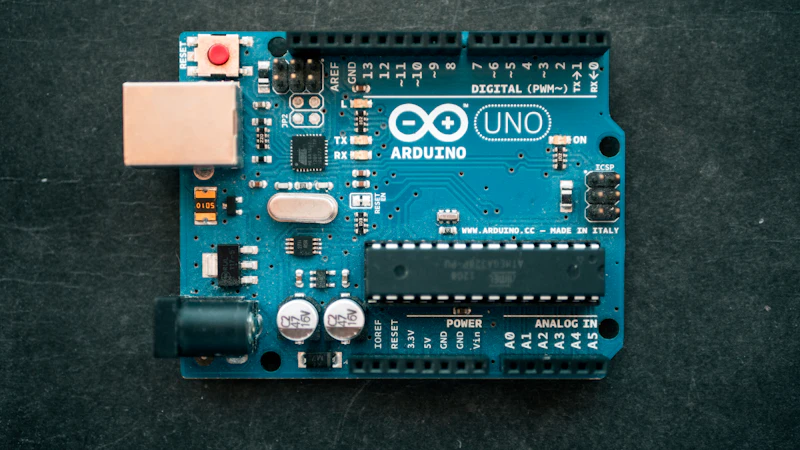
Arduino is an open-source electronics platform based on easy-to-use hardware and software. It’s essentially a small computer that can read inputs (sensors, buttons, network data) and control outputs (motors, lights, speakers, displays). You program it using a C/C++-based language, upload the code to the board, and it runs independently.
Unlike a Raspberry Pi which is a full computer, Arduino microcontrollers are designed for specific tasks: they’re more reliable, use less power, cost less, and are better suited for real-time hardware control. They’re the brain of countless IoT devices, automation systems, and custom hardware projects.
Why Arduino Matters for Businesses
Custom Solutions for Unique Problems
Off-the-shelf products solve common problems. But what if your business has unique requirements that no commercial product addresses? Arduino lets you build exactly what you need:
- Custom monitoring systems for specialized equipment
- Automation for unique manufacturing processes
- Interactive displays for retail or exhibitions
- Data collection from legacy systems without APIs
- Prototype devices before committing to expensive manufacturing
IoT Without Vendor Lock-In
Commercial IoT platforms often lock you into their ecosystem with monthly fees, limited APIs, and proprietary protocols. Arduino-based solutions give you complete control:
- Own your data and infrastructure
- Integrate with your existing systems
- No recurring subscription fees
- Modify and extend functionality as needed
- Scale at your own pace
Rapid Prototyping
Need to test an idea quickly? Arduino lets you build functional prototypes in days or weeks instead of months. Validate concepts before investing in custom hardware manufacturing or enterprise IoT solutions.
Real-World Applications
Environmental Monitoring
Arduino boards with sensors can monitor temperature, humidity, air quality, noise levels, or water quality. Data gets logged locally or sent to cloud services for analysis. Perfect for:
- Warehouses monitoring storage conditions
- Greenhouses optimizing growing conditions
- Offices tracking air quality
- Industrial facilities monitoring environmental compliance
Process Automation
Automate physical processes that humans currently handle manually:
- Automatic watering systems triggered by soil moisture
- Conveyor belt control based on weight sensors
- Lighting control based on occupancy and time
- Automated equipment testing and quality control
Data Collection
Connect Arduino to machines that don’t have digital interfaces. Read analog gauges, count events, monitor states, and send data to modern systems:
- Manufacturing equipment reporting production metrics
- Legacy HVAC systems providing energy usage data
- Mechanical counters digitized for analytics
- Equipment runtime tracking for maintenance scheduling
Interactive Installations
Create engaging physical experiences:
- Museum exhibits that respond to visitors
- Retail displays with motion-activated features
- Trade show demonstrations
- Art installations with sensor interactions
Home and Building Automation
Custom smart home solutions tailored to specific needs:
- Automated blinds based on time and sunlight
- Custom security systems
- Energy monitoring and optimization
- Integration of non-smart devices into smart ecosystems
A Real Example: WiFi-Connected Cuckoo Clock
Recently, I built a WiFi-connected cuckoo clock using an Arduino R4 WiFi. This project perfectly illustrates bridging digital and physical worlds:
The Digital Components:
- WiFi connectivity for NTP time synchronization
- MP3 audio playback for cuckoo sounds
- Web interface for configuration
- Debug logging over serial and network
The Physical Components:
- Servo motors controlling mechanical bird movement
- Speakers playing audio
- Real-time coordination of movement and sound
- Physical timing mechanisms
The Integration:
Software retrieves accurate time from internet servers, calculates when to trigger events, coordinates servo movements with audio playback, and ensures the physical movements match the digital timing. The result is a traditional mechanical concept enhanced with modern connectivity and programmability.
This seemingly simple project required debugging WiFi connections, timing servo movements precisely, synchronizing audio with physical actions, managing power consumption, and handling errors gracefully. It’s a perfect microcosm of IoT development—combining software engineering with physical world constraints.
The Technical Reality
Arduino development isn’t just software development with different syntax. It introduces unique challenges:
Resource Constraints
Arduino boards have limited memory and processing power. You can’t load huge libraries or run complex algorithms. Everything must be optimized and efficient. This constraint forces good engineering practices.
Real-Time Requirements
Physical systems operate in real-time. A servo needs precise timing. A sensor reading can’t wait. You’re dealing with interrupts, timing constraints, and concurrent operations in ways web development doesn’t require.
Hardware Integration
Software can’t fix hardware problems. You need to understand circuits, power requirements, signal levels, and physical limitations. A bug might be in your code, your wiring, or your component choice.
Reliability and Error Handling
Arduino devices often run unattended for long periods. They need robust error handling, watchdog timers, and recovery mechanisms. A crash isn’t just an annoyance—it might mean physical equipment stops working.
Debugging Challenges
You can’t just add print statements and refresh the browser. Debugging requires serial monitors, logic analyzers, multimeters, and systematic testing. Issues might only appear in specific physical conditions.
Arduino + Cloud: Complete Solutions
The real power comes from connecting Arduino hardware to cloud infrastructure:
Device ↔ Cloud Architecture
- Arduino devices collect data and control hardware
- Data transmits to cloud servers via WiFi, cellular, or LoRa
- Cloud systems store, analyze, and visualize data
- Web/mobile apps provide user interfaces
- Cloud sends commands back to Arduino devices
What This Enables:
- Remote monitoring from anywhere
- Historical data analysis and trending
- Alerts and notifications
- Machine learning on collected data
- Centralized management of multiple devices
- Integration with business systems
Development Process
Building Arduino solutions requires a systematic approach:
1. Requirements and Feasibility
Understand what needs to be sensed, controlled, or automated. Determine if Arduino is the right tool or if existing products would work better. Assess power requirements, connectivity options, and environmental factors.
2. Hardware Selection
Choose the right Arduino board, sensors, actuators, and supporting components. Consider factors like:
- Processing power and memory requirements
- Connectivity needs (WiFi, Bluetooth, cellular)
- Number and type of I/O pins needed
- Power consumption and battery life
- Physical size and enclosure requirements
- Operating temperature and environmental durability
3. Prototype Development
Build a breadboard prototype to test concepts and validate functionality. Write initial code, test sensors and outputs, and identify potential issues before committing to final hardware.
4. Software Development
Develop robust firmware with proper error handling, power management, and connectivity resilience. Implement cloud integration if needed. Build configuration and debugging capabilities.
5. Testing and Refinement
Test under real-world conditions. Verify reliability over extended periods. Handle edge cases and error conditions. Optimize power consumption and performance.
6. Production and Deployment
Create production hardware with proper enclosures. Deploy devices with installation instructions and support documentation. Set up monitoring and remote management.
When Arduino Makes Sense
Arduino is ideal when you need:
- Custom hardware solutions for unique problems
- Rapid prototyping before manufacturing
- Low-cost IoT device development
- Integration of legacy equipment with modern systems
- Control of physical hardware in real-time
- Learning and educational projects
- Small to medium-scale deployments (1-1000 devices)
Arduino might not be ideal for:
- Mass manufacturing (consider custom PCBs instead)
- High-performance computing requirements
- Complex user interfaces (use Raspberry Pi)
- When excellent commercial solutions exist
The Business Value
Arduino prototyping offers several business advantages:
- Lower Risk: Test concepts cheaply before major investment
- Custom Solutions: Build exactly what you need, not what vendors offer
- Fast Iteration: Make changes quickly as requirements evolve
- Full Control: Own your hardware, software, and data
- Integration Freedom: Connect to any system or platform
- Competitive Advantage: Solve problems competitors can’t
Getting Started
Interested in Arduino solutions for your business? The process typically starts with:
- Understanding your specific needs and constraints
- Evaluating whether Arduino is the right solution
- Creating a proof-of-concept prototype
- Developing and testing a functional prototype
- Deploying and supporting production devices
The beauty of Arduino is that you can start small—a single prototype to validate the concept—then scale based on results.
Ready to Bridge Digital and Physical? GTM Enterprises develops custom Arduino solutions for businesses needing hardware prototyping, IoT devices, or automated systems. We combine software expertise with hardware knowledge to create reliable solutions that connect your digital systems to the physical world. Learn more about our Arduino prototyping services or contact us to discuss your project.